
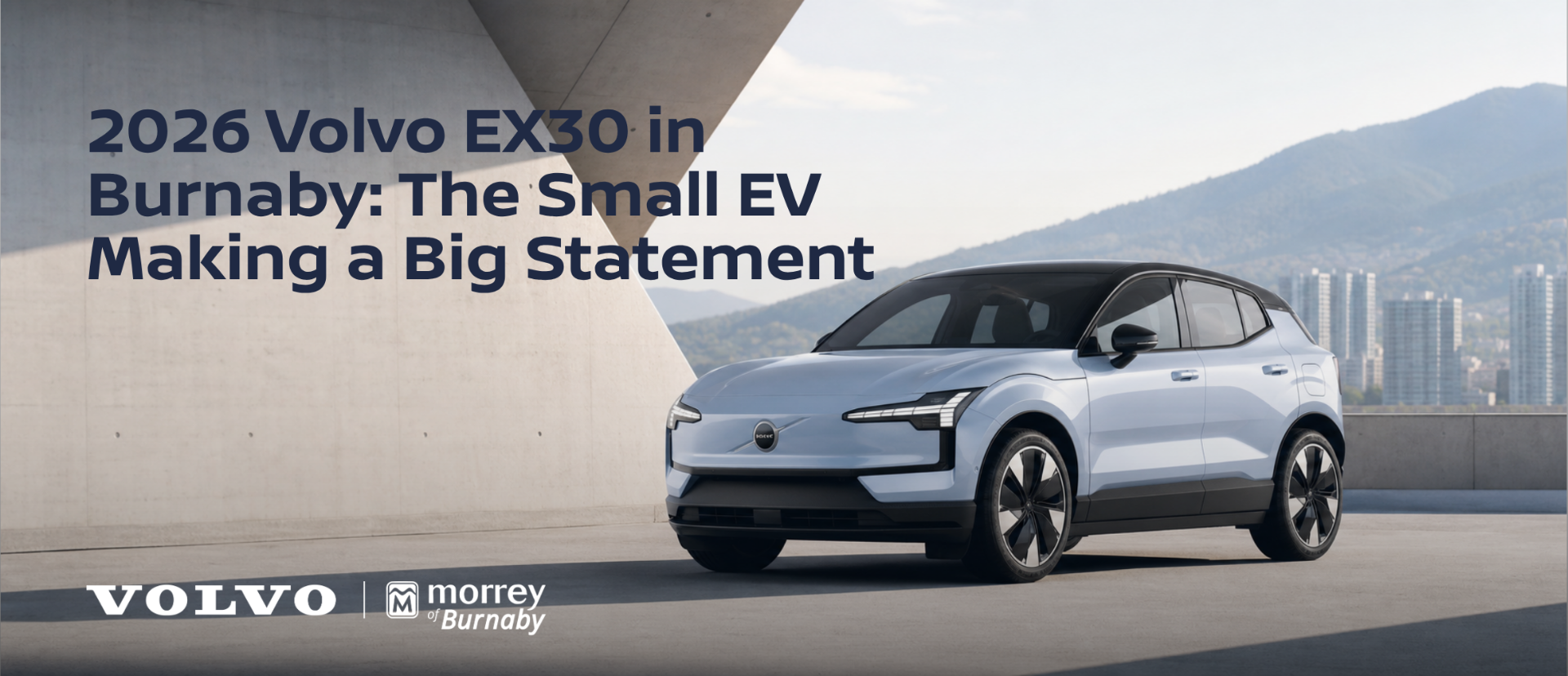
2026 Volvo EX30 in Burnaby: The Small EV Making a Big Statement
The Volvo EX30 Is Volvo's Most Exciting Car in Years. Here's Why Burnaby Buyers Are Paying Attention Volvo has always stood for something specific:...
Read moreMorrey Volvo Cars Burnaby
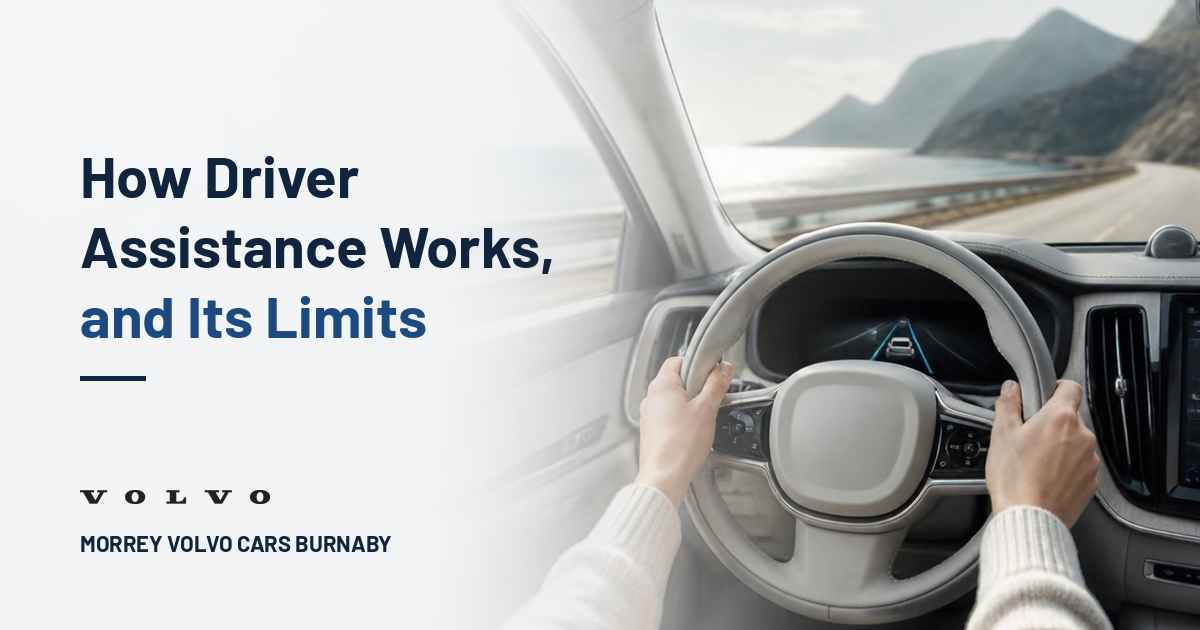
There is a gap between what driver assistance systems do and what drivers believe they do, and that gap is where the problems live.
The technology is genuinely excellent. Automatic emergency braking, lane keeping, blind spot monitoring and adaptive cruise control collectively prevent a substantial number of collisions every year. But every one of these systems has defined boundaries, and almost none of those boundaries are explained anywhere the average owner will read them.
Understanding what the sensors actually perceive changes how you use the technology. It also explains the moments when a system behaves in a way that feels wrong, because in almost every case it is behaving exactly as designed, under conditions its designers anticipated and you did not.
Quick Answer: Driver assistance systems combine radar, cameras and ultrasonic sensors to detect objects, lane markings and closing speeds. They are designed to assist a driver who remains fully engaged, not to replace one. All of them degrade in heavy rain, snow, low sun and poor lane marking conditions, which is exactly when drivers are most tempted to rely on them.
Modern vehicles use three sensor types with different strengths. Radar measures distance and closing speed accurately in poor weather but resolves shape poorly. Cameras read lane markings, signs and object shapes but need adequate light and contrast. Ultrasonic sensors handle close-range detection for parking.
The systems combine these inputs because no single sensor is sufficient. Radar can tell you something is 40 metres ahead closing at 30 kilometres per hour, but not reliably whether it is a stopped vehicle or an overhead sign. A camera can identify a pedestrian shape but struggles to judge distance precisely. Fusing both produces a picture neither could generate alone.
This fusion is also why sensor obstruction matters so much. A camera behind a windshield section covered in road film, or a radar unit behind a grille packed with wet leaves, degrades the entire system rather than just one function. Lower Mainland winters produce both conditions routinely.
Adaptive cruise control maintains a set speed while automatically adjusting to preserve a following distance from the vehicle ahead. It handles steady traffic flow well and struggles with sudden changes at the edges of its detection field.
The most common surprise is the cut-in scenario. A vehicle changing into your lane close ahead may not be detected until it is substantially within the lane, at which point the system brakes more abruptly than you would have. Conversely, when the vehicle ahead changes lanes to reveal a much slower vehicle, the system needs a moment to reacquire and may respond later than a human driver watching the situation develop.
Stationary objects are the other known limitation. Many radar systems deliberately filter out non-moving returns to avoid braking for overhead signs and roadside furniture, which means a fully stopped vehicle at the end of a queue is a genuinely difficult detection case. This is documented behaviour across the industry, and research from the Insurance Institute for Highway Safety has examined it extensively.
Lane keeping uses a forward camera to identify lane markings and applies gentle steering correction or a warning when the vehicle drifts. It requires clear, visible markings on both sides and disengages when it cannot find them.
British Columbia gives this system a hard time. Heavy rain obscures markings, worn paint on older stretches gives poor contrast, construction zones present conflicting lines, and standing water reflects in ways that confuse the camera. In each of these, the system does the correct thing by disengaging, which is also the moment drivers most want help.
Low sun angle is another common failure condition, particularly in fall and winter when the sun sits low during commuting hours. A camera facing directly into low sun loses contrast the same way your eyes do.
Blind spot monitoring uses rear-facing radar to detect vehicles in adjacent lanes, and it is tuned for typical closing speeds. A vehicle approaching much faster than expected can traverse the detection zone quickly enough that the warning arrives late.
Motorcycles and cyclists are the harder cases. A motorcycle presents a smaller radar return than a car and often approaches at a higher speed differential, particularly in lane-splitting or filtering situations. Bicycles are smaller still and are frequently in a position that the system was never designed to monitor.
The practical conclusion is not to distrust the system. It is that blind spot monitoring supplements a shoulder check rather than replacing it. The system catches what you might miss, and the shoulder check catches what the system might miss. Both, every time.
Cameras and radar units are aimed with tight tolerances, and small changes in their alignment translate into significant errors at distance. Windshield replacement, suspension work, alignment changes and even a minor bumper impact can require recalibration.
The windshield case is the one owners most often miss. On vehicles with a forward camera mounted behind the glass, replacing the windshield almost always requires camera recalibration, because the mounting position and the optical properties of the glass both affect what the camera sees. A replacement done without recalibration can leave the system operating on incorrect assumptions without displaying any fault.
Sensor cleaning is the everyday version of the same principle. Keep the windshield clear in the camera's field of view, keep the front grille and bumper sensor areas free of debris and ice, and treat a persistent sensor warning as a genuine service item. Speak with our service team about sensor calibration if you have had glass or bodywork done.
Use them as a second set of eyes that never gets tired, while remaining the primary system yourself. The safest drivers treat assistance features as a margin of protection rather than a reduction in their own workload.
There is a well-documented behavioural risk here. When a system performs reliably for months, drivers gradually reduce their own vigilance, which is exactly the wrong adaptation because the system's failure modes are concentrated in unusual conditions. The moment you most need to be paying full attention is the moment the technology is most likely to be struggling.
Read your owner's manual section on these systems specifically. It is the one part of the manual with genuinely useful information that owners almost never open, and it documents the exact limits of your vehicle's implementation.
Want to understand what a specific vehicle offers? Explore the current lineup, book a service appointment for a sensor check, or learn more about Morrey Volvo Cars Burnaby.
No. Driver assistance systems are designed to support an attentive driver who remains fully responsible for the vehicle at all times. They handle specific tasks under specific conditions and hand control back, sometimes abruptly, when conditions exceed their design limits. The driver remains the primary control system throughout.
Because the forward camera cannot reliably identify lane markings through heavy rain, spray and standing water. The system disengages rather than acting on unreliable data, which is the correct behaviour. Faded markings, construction zones and low sun angles cause the same response for the same reason.
No. Systems have defined operating speed ranges, and performance varies considerably between low-speed urban scenarios and highway speeds. Many perform best in the low to moderate speed range where most collisions occur. Detection of pedestrians and cyclists also depends on lighting conditions and is generally weaker at night.
In most cases, yes. Vehicles with a forward-facing camera mounted behind the windshield require recalibration after glass replacement, because both mounting position and glass optical properties affect what the camera perceives. A replacement done without recalibration can leave the system operating incorrectly without indicating a fault.
No. Blind spot monitoring is tuned for typical closing speeds and larger vehicle profiles, so fast-approaching vehicles, motorcycles and cyclists can be detected late or not at all. Use the system as a supplement that catches what you might miss, and continue performing a shoulder check every time.
2026 Volvo EX30 in Burnaby: The Small EV Making a Big Statement
The Volvo EX30 Is Volvo's Most Exciting Car in Years. Here's Why Burnaby Buyers Are Paying Attention Volvo has always stood for something specific:...
Read more
New vs. Used Volvo in Burnaby: Which Is Right for You in 2026?
Buying a vehicle is one of the biggest financial decisions you'll make — and one of the first questions most buyers face is whether to go new or...
Read more
Why April Is a Great Time to Buy a Volvo
Spring has arrived in the Lower Mainland, and if you've been thinking about buying a new vehicle, April is one of the best times to act. At Morrey...
Read morePowered and developed by
