
Photo for illustrative purposes only.
Find out moreMorrey Volvo Cars Burnaby

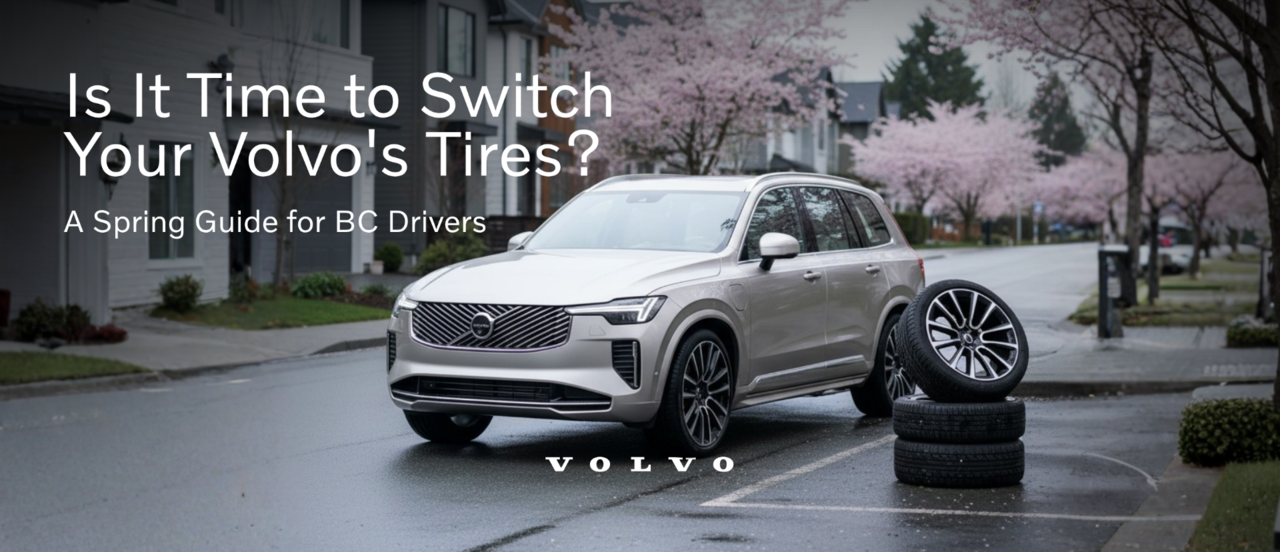
The transition from winter to spring driving in BC doesn't happen all at once, and neither should your tire switch. Getting the timing right protects your Volvo's performance, extends the life of both sets of tires, and keeps you legal on the highways. Here's what to know this season.
What Temperature Should Trigger the Switch?
Winter tires are engineered for one specific purpose: maintaining grip and pliability below 7°C. Once temperatures consistently climb above that threshold, the soft rubber compound that makes winter tires effective in cold conditions starts working against you, wearing faster on warm pavement, generating more heat, and reducing handling precision. In Metro Vancouver, that consistent temperature shift typically arrives in late March or April. Watch the two-week forecast and make the switch when overnight lows stop dipping below 7.
In Metro Vancouver itself, there is no municipal rule dictating when you must switch. On provincial highway routes, it is different. BC requires winter tires on designated routes including the Coquihalla and Highway 1 through the Fraser Canyon and Rogers Pass from October 1 to April 30. If those routes are part of your regular travel, hold your winter tires until after April 30 before swapping them out.
A five-minute inspection before storage can save you a surprise in October. BC's legal minimum tread depth for winter tires is 3.5mm, but Transport Canada recommends replacing them before they reach 4mm for reliable winter performance. Use a Canadian quarter inserted into the tread groove with the caribou's nose pointing down — if the tip of the nose is visible, plan to replace before next winter. Beyond tread, check tire pressure and inspect each sidewall carefully for cracking, bulging, or cuts.
Yes, and it matters. Volvo's XC60, XC40, and XC90 each carry different OEM tire specifications depending on trim, ranging from 235/65R17 on base configurations to 255/45R20 on higher trims. Fitting the wrong size affects ride quality, speedometer calibration, and the performance of Volvo's safety systems including City Safety and Pilot Assist. Always verify your specific trim's tire size before purchasing.
A spring tire changeover is a natural point to have your brakes inspected and fluids checked after a full winter season. One visit handles everything. Book a service appointment at Morrey Volvo of Burnaby, and the service team will take it from there.
Photo for illustrative purposes only.
Find out more
2026 Volvo EX30 in Burnaby: The Small EV Making a Big Statement
The Volvo EX30 Is Volvo's Most Exciting Car in Years. Here's Why Burnaby Buyers Are Paying Attention Volvo has always stood for something specific:...
Read more
New vs. Used Volvo in Burnaby: Which Is Right for You in 2026?
Buying a vehicle is one of the biggest financial decisions you'll make — and one of the first questions most buyers face is whether to go new or...
Read more
Why April Is a Great Time to Buy a Volvo
Spring has arrived in the Lower Mainland, and if you've been thinking about buying a new vehicle, April is one of the best times to act. At Morrey...
Read morePowered and developed by
